

Exhibition
Bethlen–Rákóczi Castle in Gyimesbükk,
A Thousand Years of History in the Gyimes Pass, on the Banks of the Tatros
Presentation of the historical exhibition
The complex restoration of the Bethlen–Rákóczi Castle has created an iconic tourist attraction on the banks of the Tatros, which in itself makes a visit to the Gyimes Valley worthwhile for visitors.
Throughout the project, we followed the principle of value-based utilisation: we combined heritage conservation with the functions of a modern visitor centre, which serves as a forum for collective memory and strengthens identity.
The exhibition housed within the castle walls is a kind of historical deep dive, guiding the visitor from the castle’s foundation in 1626 right through to its rebirth in 2026, revealing previously unseen, personal layers of the past.
When designing the exhibition, the focus was on creating an immersive experience, so we utilised the latest digital innovations through various themes and displays. We paid particular attention to the needs of Generations Y and Z: the exhibition’s visual language, the spectacular backlit panels and the screens displaying moving images dynamically engage the younger generation in line with today’s expectations.
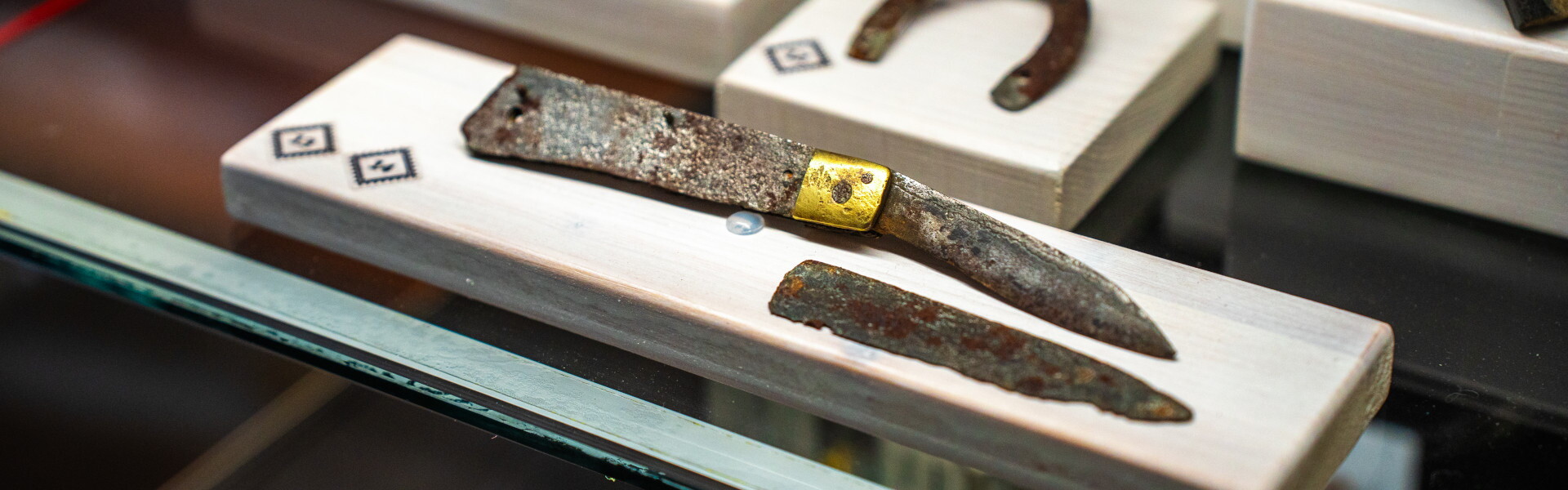
The exhibition not only explores the strategic importance of border defence but also reveals the small secrets of soldiers’ everyday lives through archaeological finds unearthed from the ground.
This complex visitor experience preserves the values of the past for future generations, whilst also fully serving the leisure needs of the present through the castle tavern, the panoramic terrace and the modern information centre.
The ‘layers’ of the innovative use of Bethlen–Rákóczi Castle, developed as a tourist attraction:
- Monument protection, heritage preservation
- Development of tourist attractions
- Cultural community space
- Non-formal education
- Job creation
- Economic revitalisation (micro-regional and regional)
- Multiplier effects (local businesses)
- Rural development
- Strengthening of identity
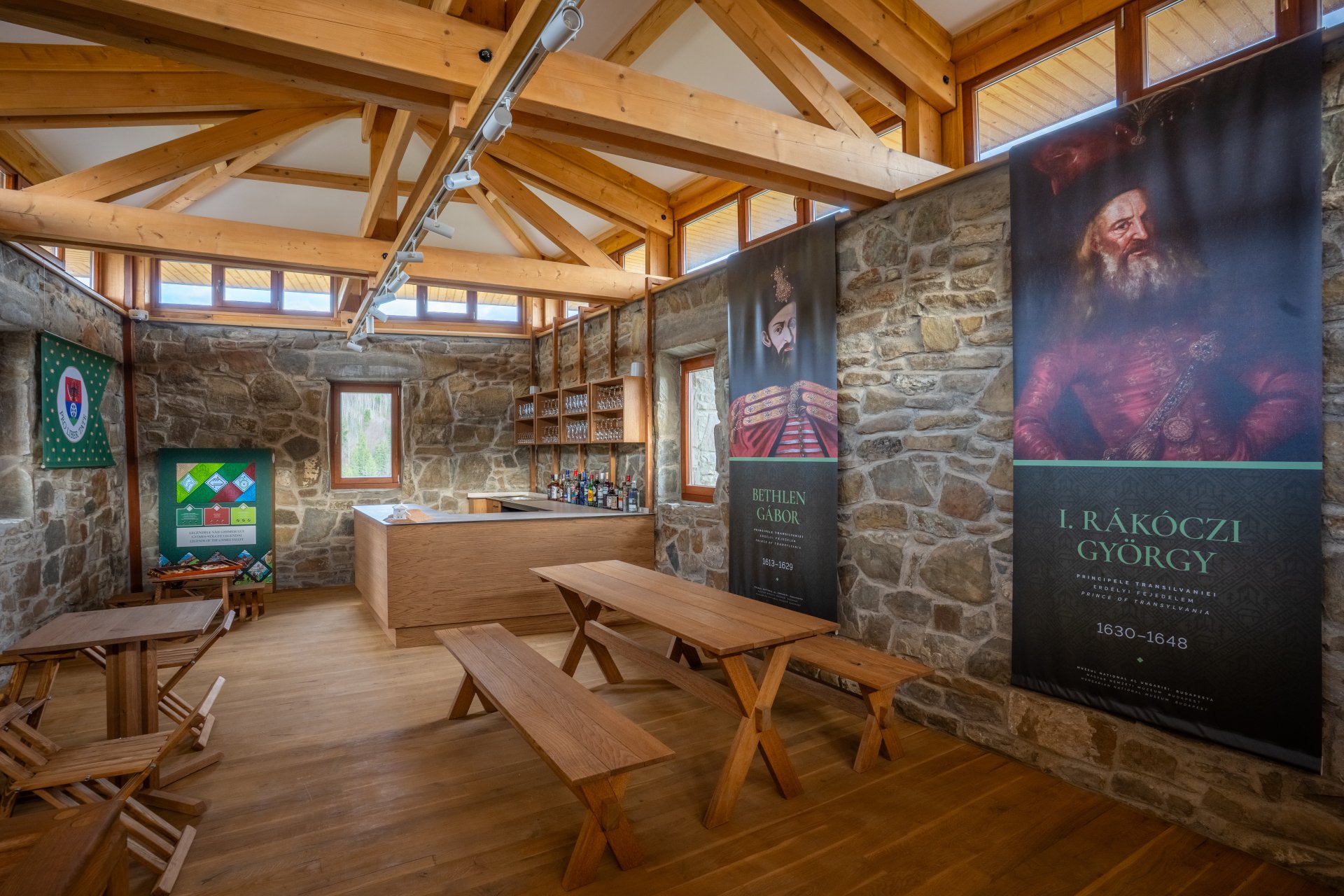
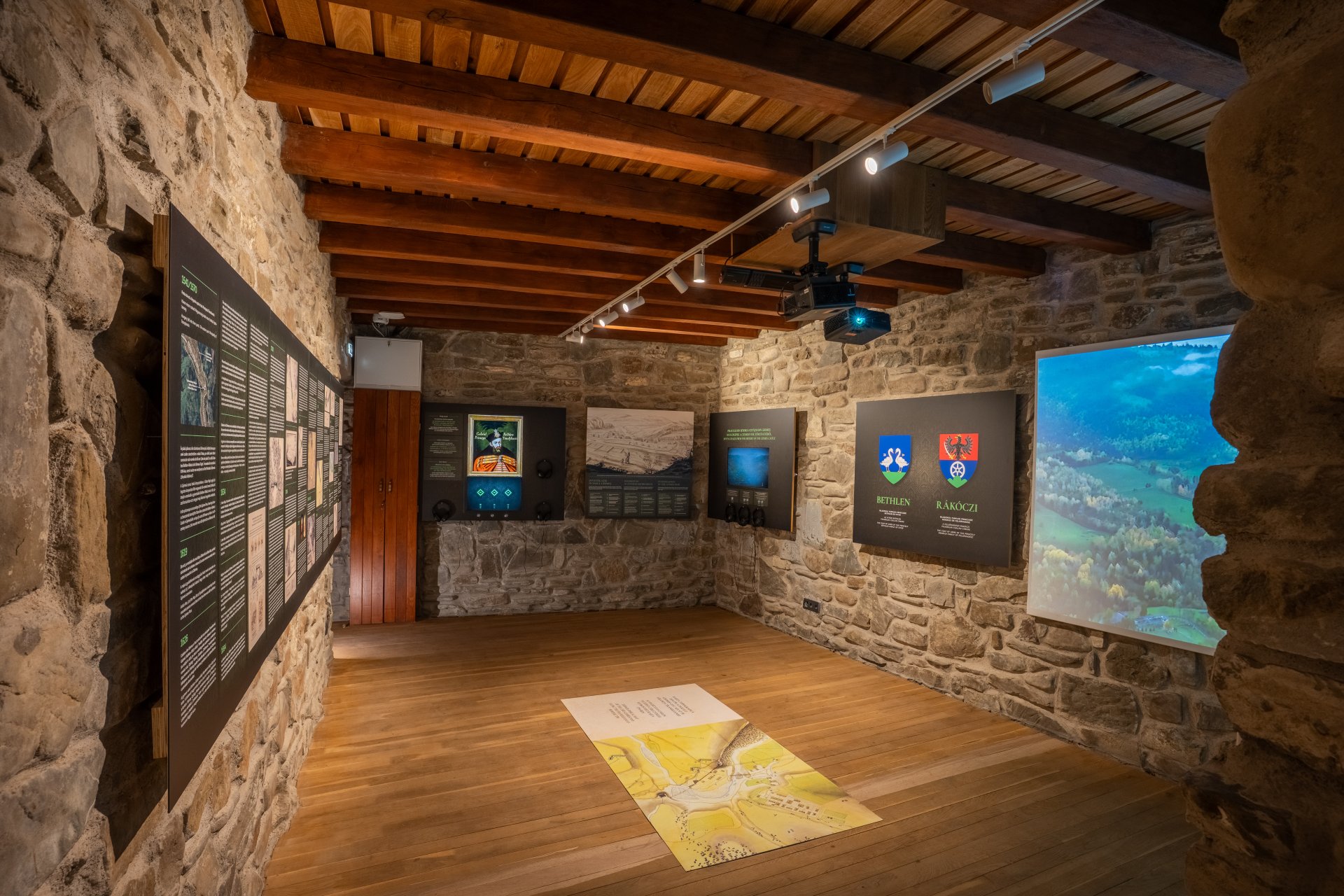
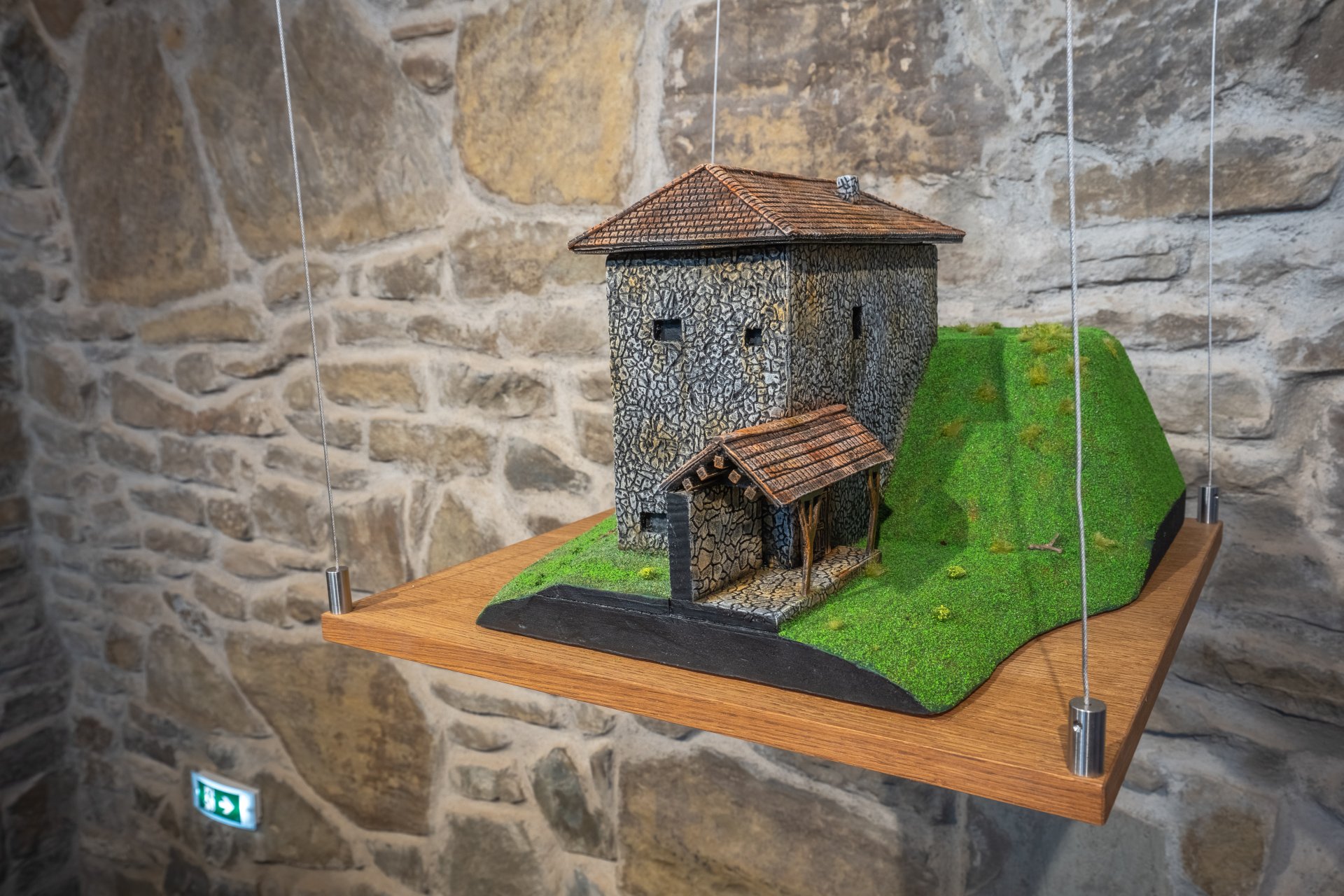
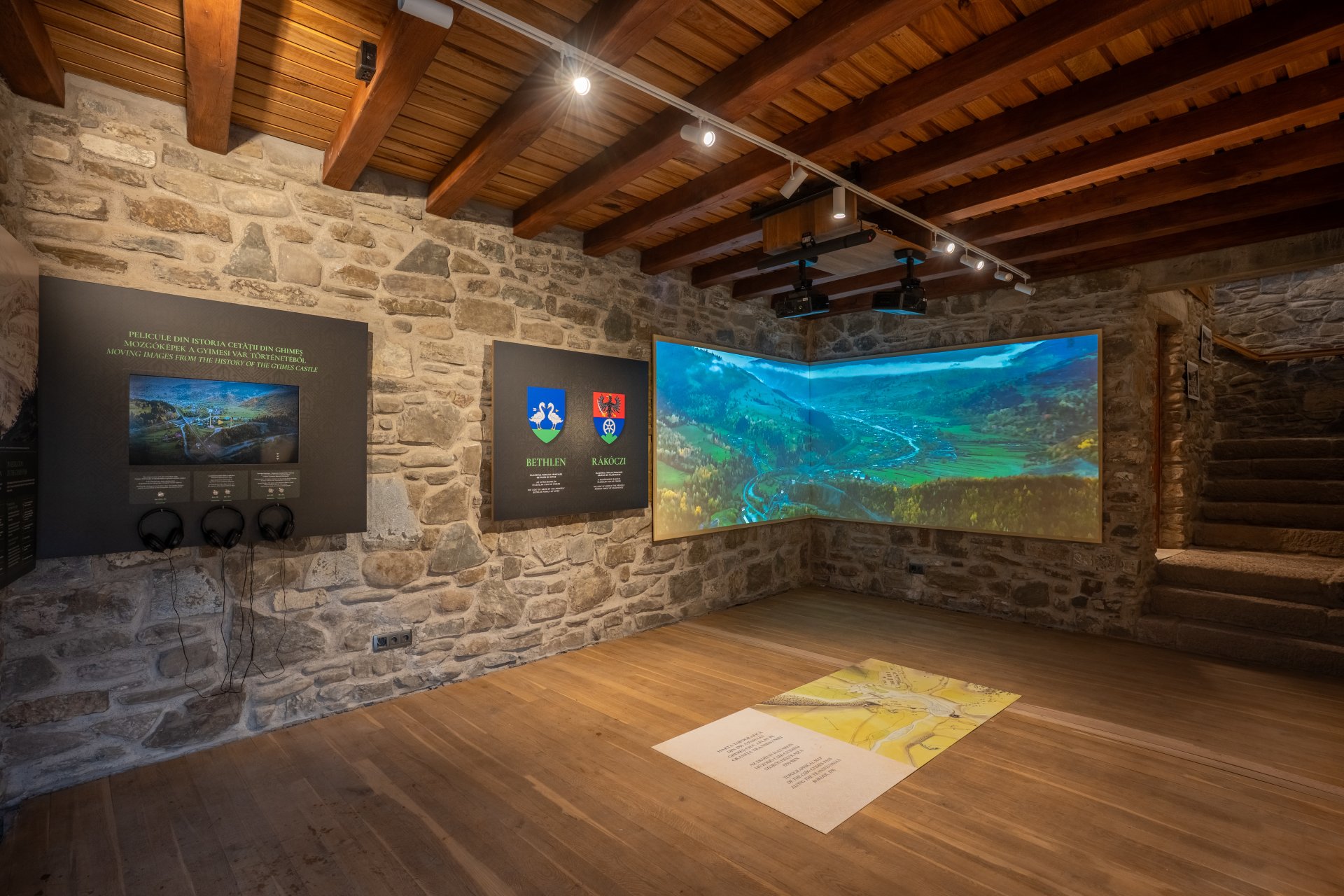
The Bethlen–Rákóczi Castle in Gyimesbükk. A thousand-year history in the Gyimes Gorge, on the banks of the Tatros – Animated film
One of the most unique highlights of the visitor route is the film on the castle’s history, which takes the viewer on a journey from its foundation in 1626 right through to its rebirth in 2026. This is not merely a historical documentary, but an extraordinary visual experience that combines state-of-the-art technology with the values of the past.
The film’s technical solution is unique: the L-shaped projection breaks with traditional, flat visual presentation and offers an immersive experience that extends the spectacle into three dimensions. Through the perpendicular surfaces, the visitor is not merely an outside observer of 400 years of history, but is almost drawn into the history of the castle and the Gyimes Pass.
The film’s visual world is uniquely layered: archive footage, old maps and engravings are brought to life through spectacular aerial shots and unique digital 3D animated models.
It is this complex, multi-dimensional narrative style that makes the 400-year history of the Gyimes border defences and Bethlen–Rákóczi Castle more vivid and spectacular for the audience than ever before.
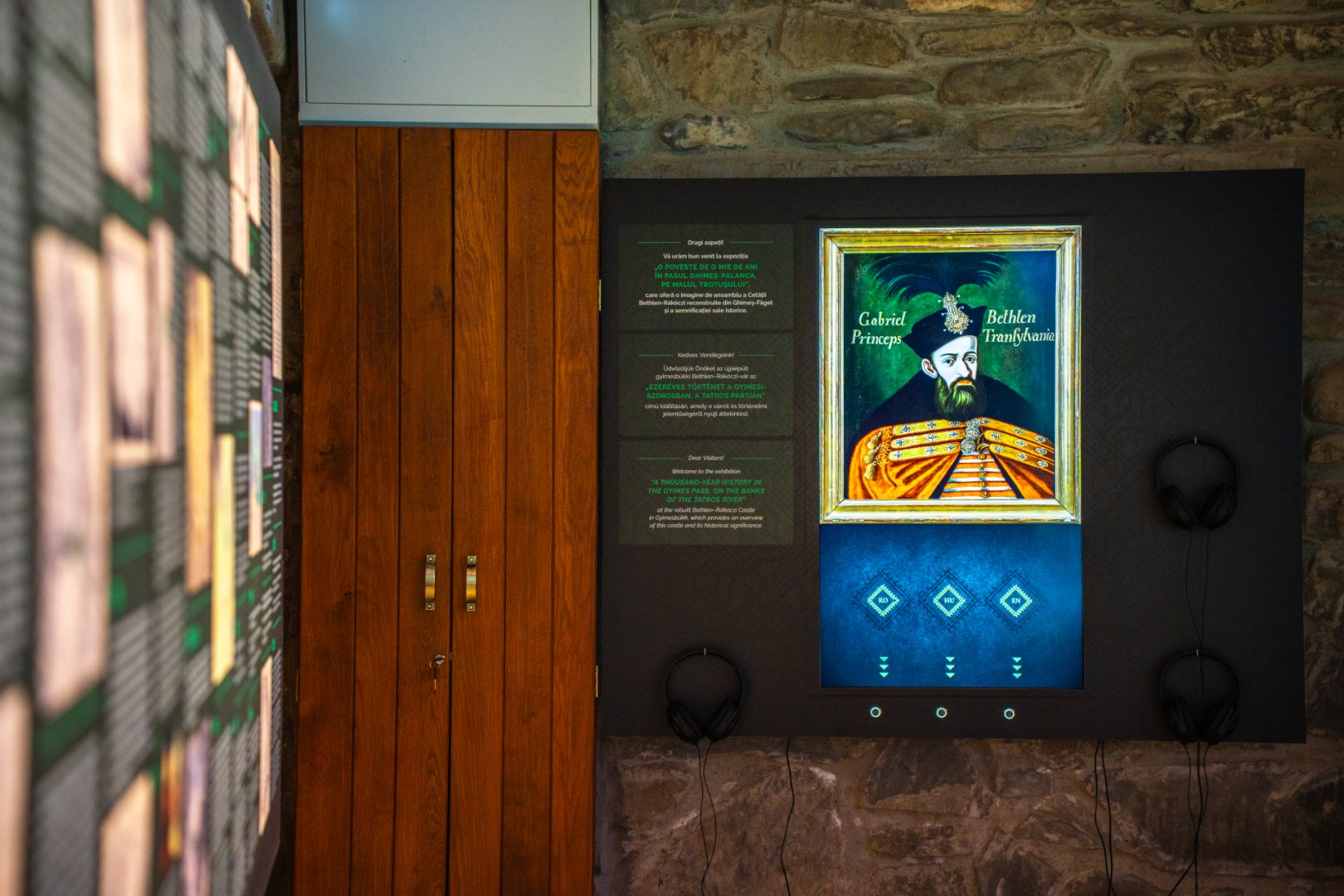
Welcome by Gábor Bethlen, Prince of Transylvania
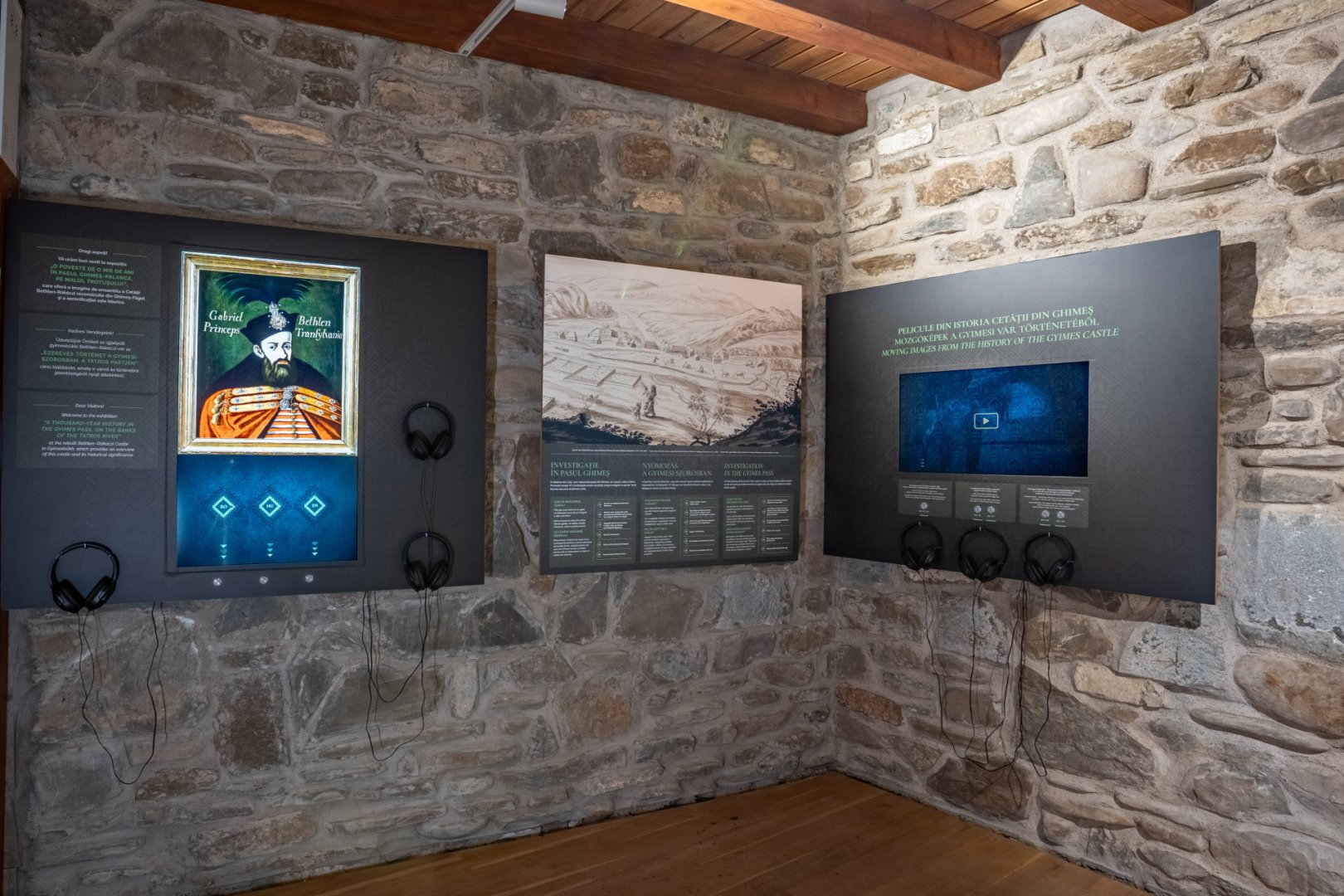
Stepping within the walls of the fortress built in 1626, visitors are greeted by Gábor Bethlen, the Prince of Transylvania who commissioned the castle. In a personal greeting generated by artificial intelligence from the prince’s original oil portrait, he recounts, as a sort of ‘talking picture’, the circumstances and objectives that led to the establishment of border control points along Transylvania’s passes, mountain passes and gorges.
Investigation in the Gyimes Pass
The castle’s exhibition also features a real detective game. Visitors must use the UV lamps provided to find the letters hidden in a historically significant drawing dating from 1735. Short clues assist in the search, guiding players in selecting and arranging the letters. When the letters are read together, a secret word emerges.
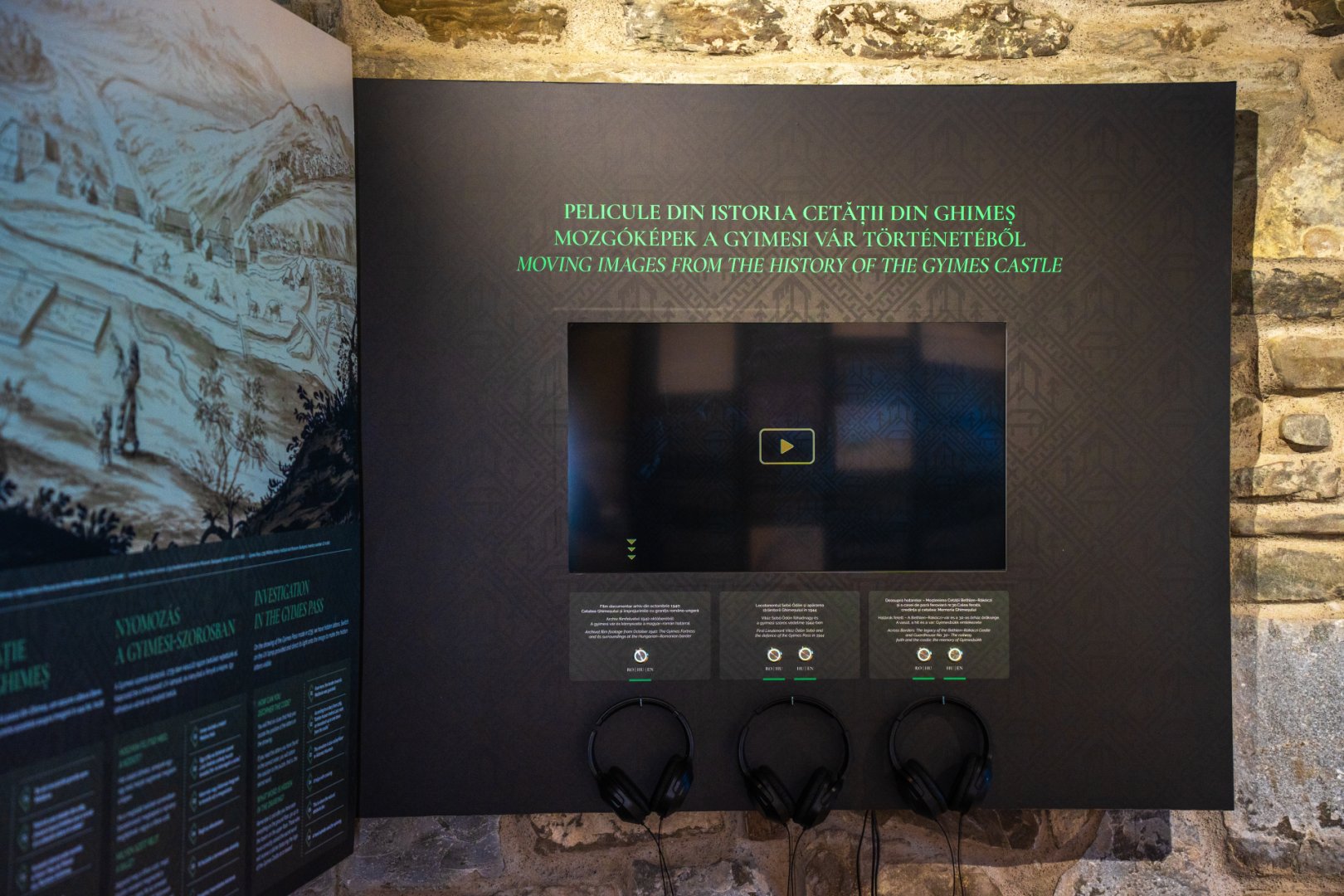
Moving images from the history of Gyimes Castle
Archival film footage from October 1940: Gyimes Castle and its surroundings on the Hungarian–Romanian border
The content to be presented on the screen installation is a few-minute-long excerpt from an archive newsreel from October 1940, showing moving images of the castle ruins and the surrounding buildings.
First Lieutenant Ödön Sebő and the defence of the Gyimes Pass in 1944
In the autumn of 1944, the Red Army reached Hungary’s eastern border at Gyimesbükk in Transylvania. In the pass that had defended the Kingdom of Hungary for centuries, a battalion of several hundred Hungarian border guards under the command of First Lieutenant Ödön Sebő managed to hold off the vastly superior Soviet forces—supported by the Romanian army, which had since defected—for three weeks. A short film shown in the exhibition commemorates this feat.
Beyond Borders: The Legacy of Bethlen–Rákóczi Castle and Guardhouse No. 30 – The Railway, Faith and the Castle: Memories of Gyimesbükk
Whilst cultural heritage shapes a community’s identity, heritage communities preserve and pass on certain cultural practices to future generations. The memory of Gyimesbükk is defined by this two-way process. Thus, the aim of the short film presented as part of the screen installation is to capture this, that is, to show—starting from the renovation of railway signal box No. 30 in Gyimesbükk—how abandoned historical heritage (the Bethlen–Rákóczi Castle, the railway signal box and the Kontumáci Chapel) has become a symbol of cross-border cooperation in the collective memory.
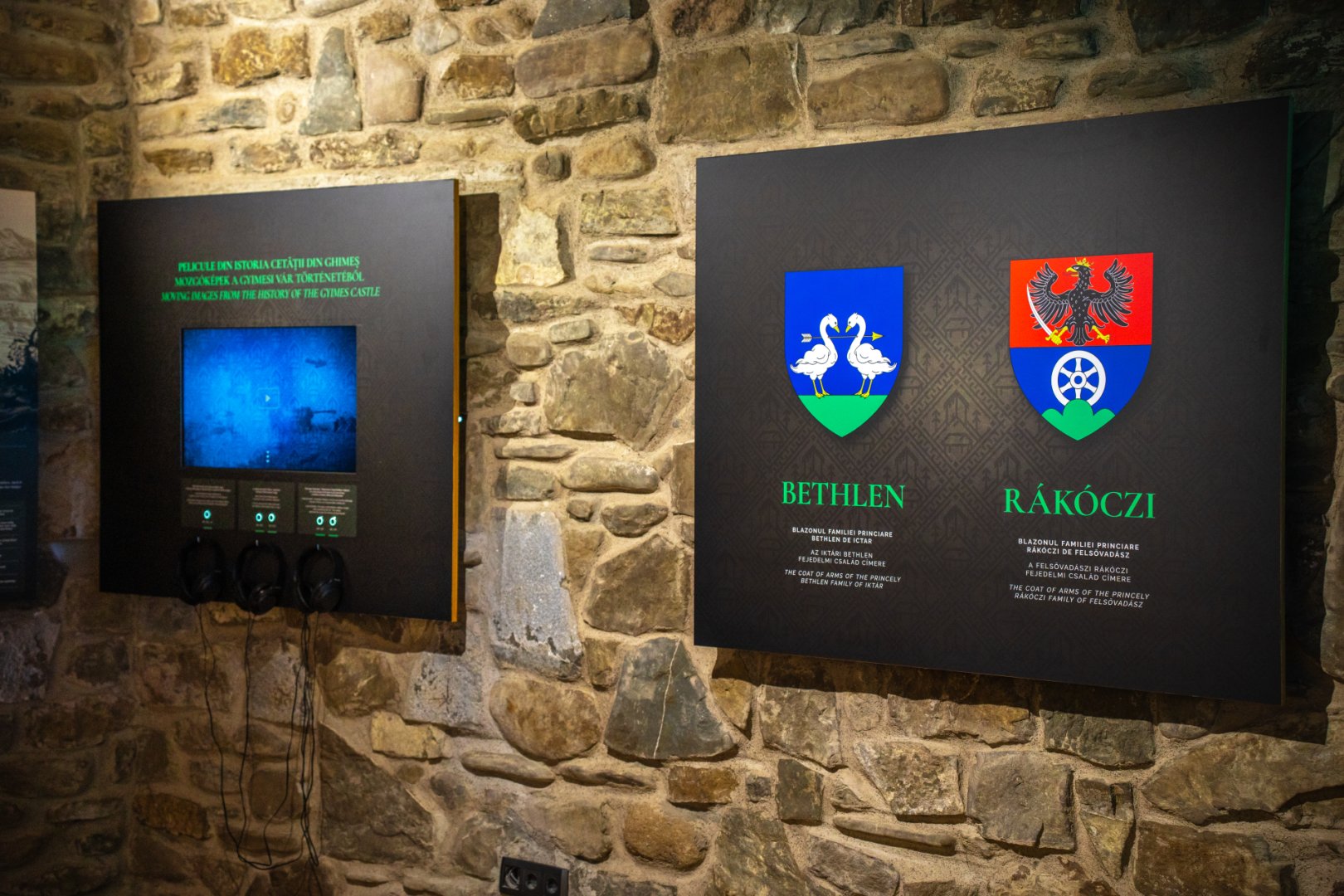
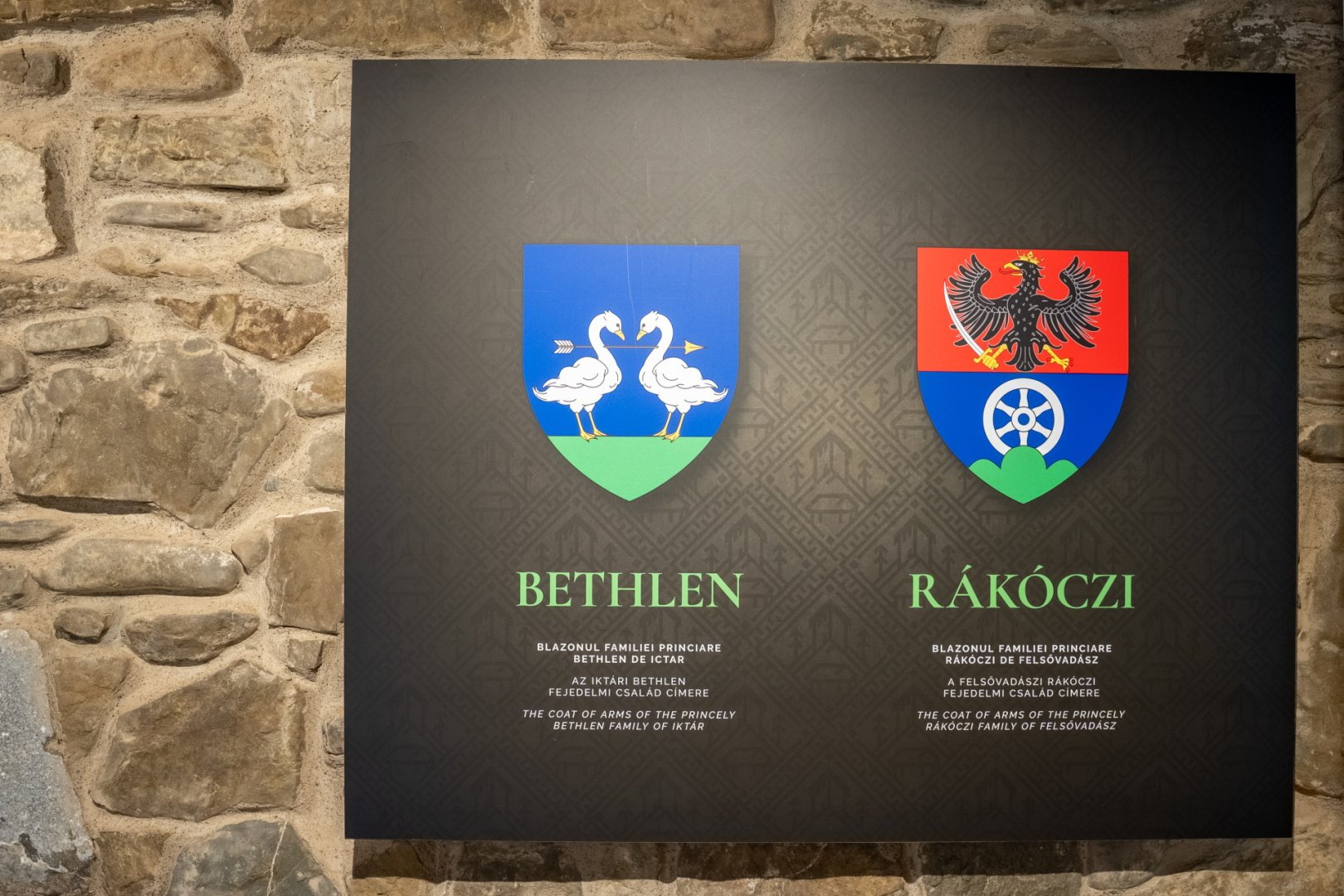
The coats of arms of the princely families of Bethlen of Iktár and Rákóczi of Felsővadász
In Europe, and thus in historical Hungary as well, the coats of arms of noble families symbolised the families’ identity, rank and privileges, which they received as gifts from the monarch. Coats of arms most commonly consisted of motifs placed on a shield, shield figures and a crest above the shield, symbolising loyalty, valour or the merits that earned nobility. The exhibition features the coats of arms of the two noble families that shaped the castle’s history: the Bethlen family of Iktár and the princely Rákóczi family of Felsővadász.
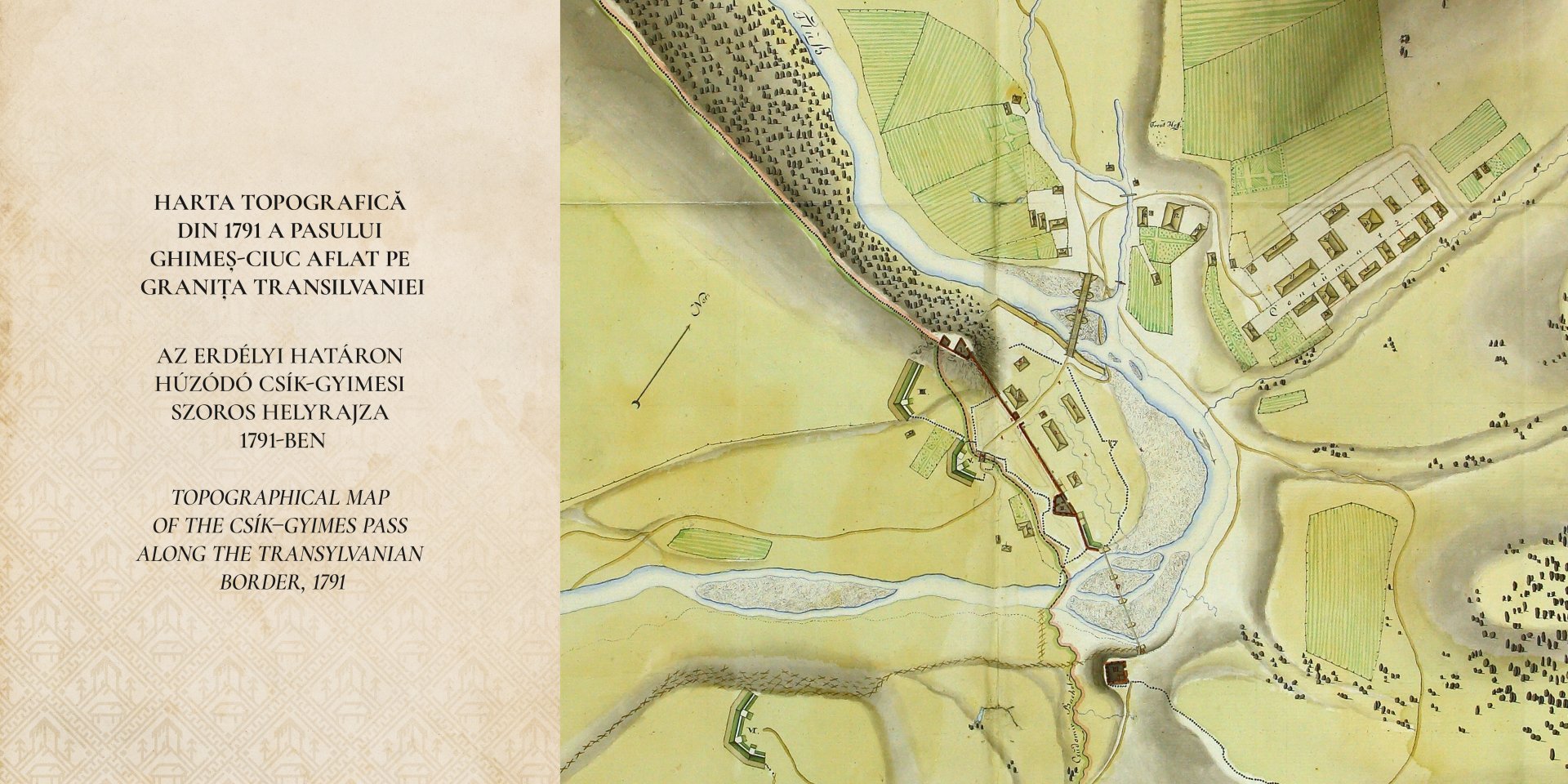
A map of the Csík-Gyimes Pass along the Transylvanian border, 1791
The Gyimes Pass has been an important route between Transylvania and Moldavia for centuries; even today, it remains one of the most significant mountain passes in the Eastern Carpathians, through which the road leads over the ridge of the Csík Mountains, from Csíkszépvíz, into the narrow valley of the Tatros River as it flows towards Moldavia. The floor graphic in the centre of the castle’s ground-floor hall captures a frozen moment in the life of the Gyimes Pass and depicts its topography as it was in 1791.
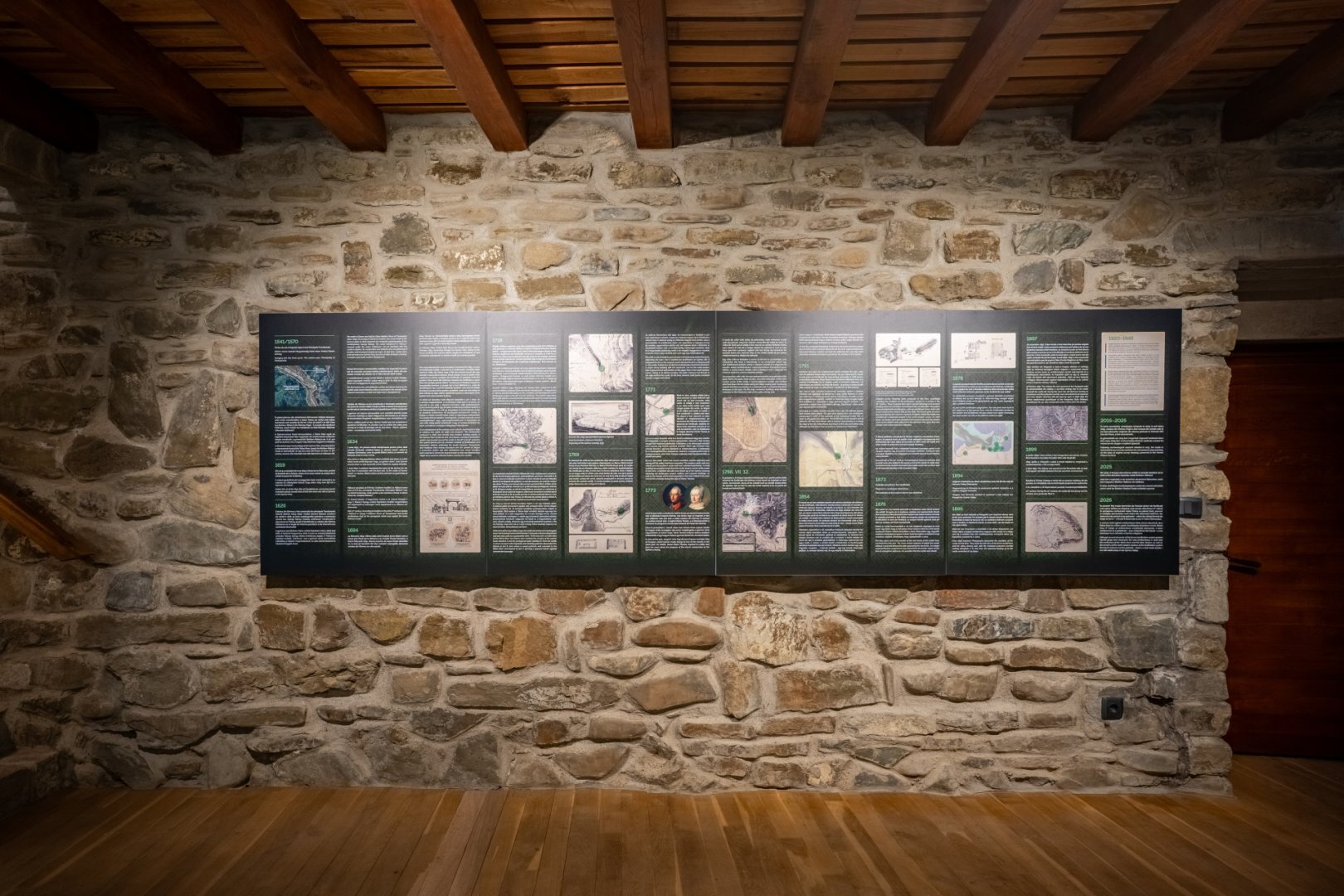
A Chronicle of Four Centuries: The History of the Bethlen–Rákóczi Castle in Gyimesbükk (1626–2026)
Along the timeline, historical maps and engravings guide visitors through the centuries of the castle and fortification system’s development, from 1626 to 2026. The timeline presents, in chronological order, the key periods of the castle’s construction, transformations, destruction and subsequent reconstruction, as well as the historical events that shaped its fate.
Scenes from the time of the castle’s construction
According to written sources, Gyimesbükk Castle was built in 1626. This date roughly coincides with the publication of Johannes Amos Comenius’s work *Orbis Sensualium Pictus* (*The World in Pictures*), which appeared in London in 1659. The engravings in the volume provide an authentic picture of everyday life during the early modern period of the castle’s construction. A selection of these engravings can be seen on the walls of the washrooms.

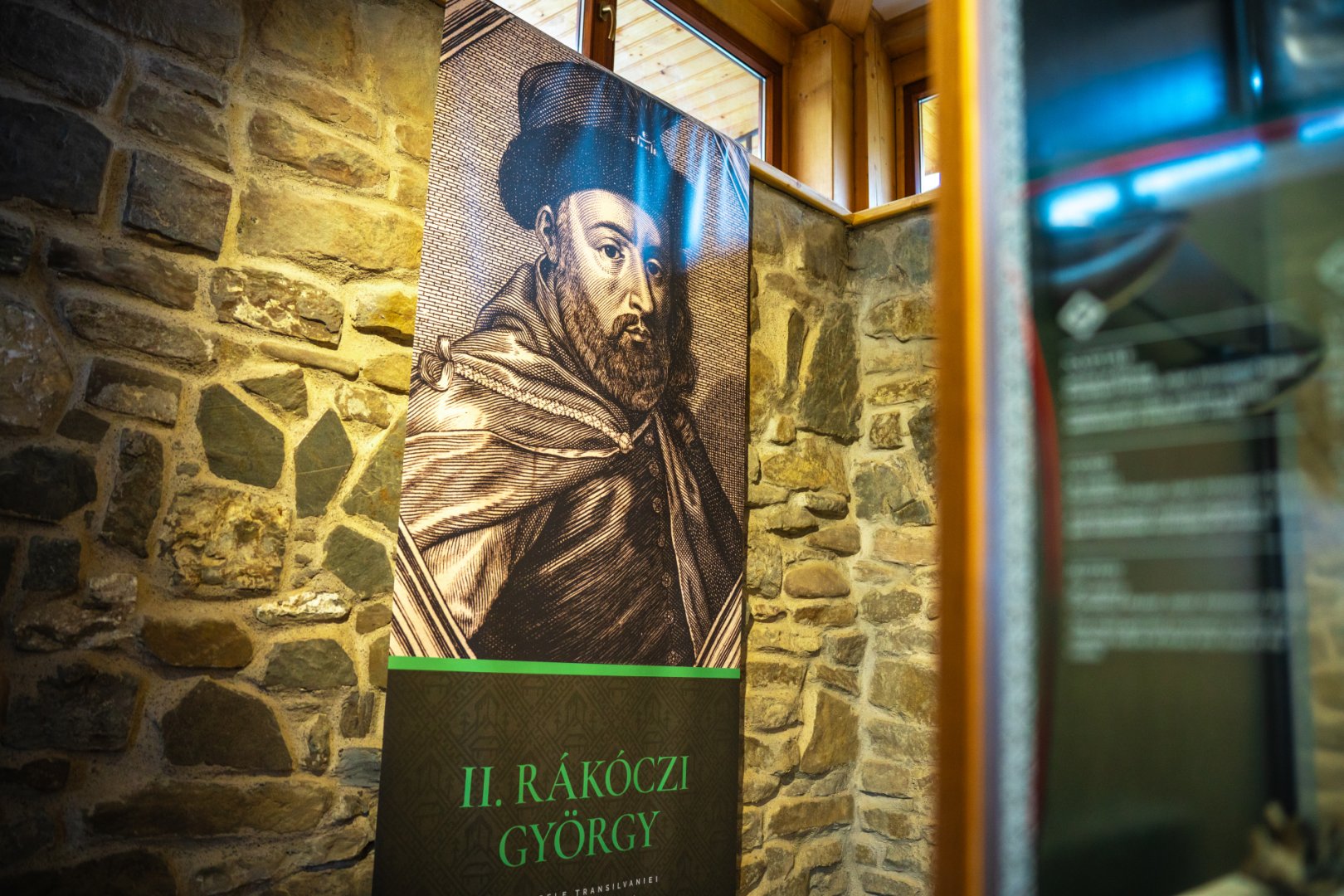
Portraits of rulers
Portraits of rulers became truly significant in castles and palaces during the early modern period as instruments of the representation of power. These images not only adorned the rooms but also proclaimed the ruler’s legitimacy and authority. On the textiles hanging upstairs, one can view copies of representative oil portraits and engravings of the Transylvanian princes associated with the castle – Gábor Bethlen, György Rákóczi I, György Rákóczi II and Ferenc Rákóczi II.
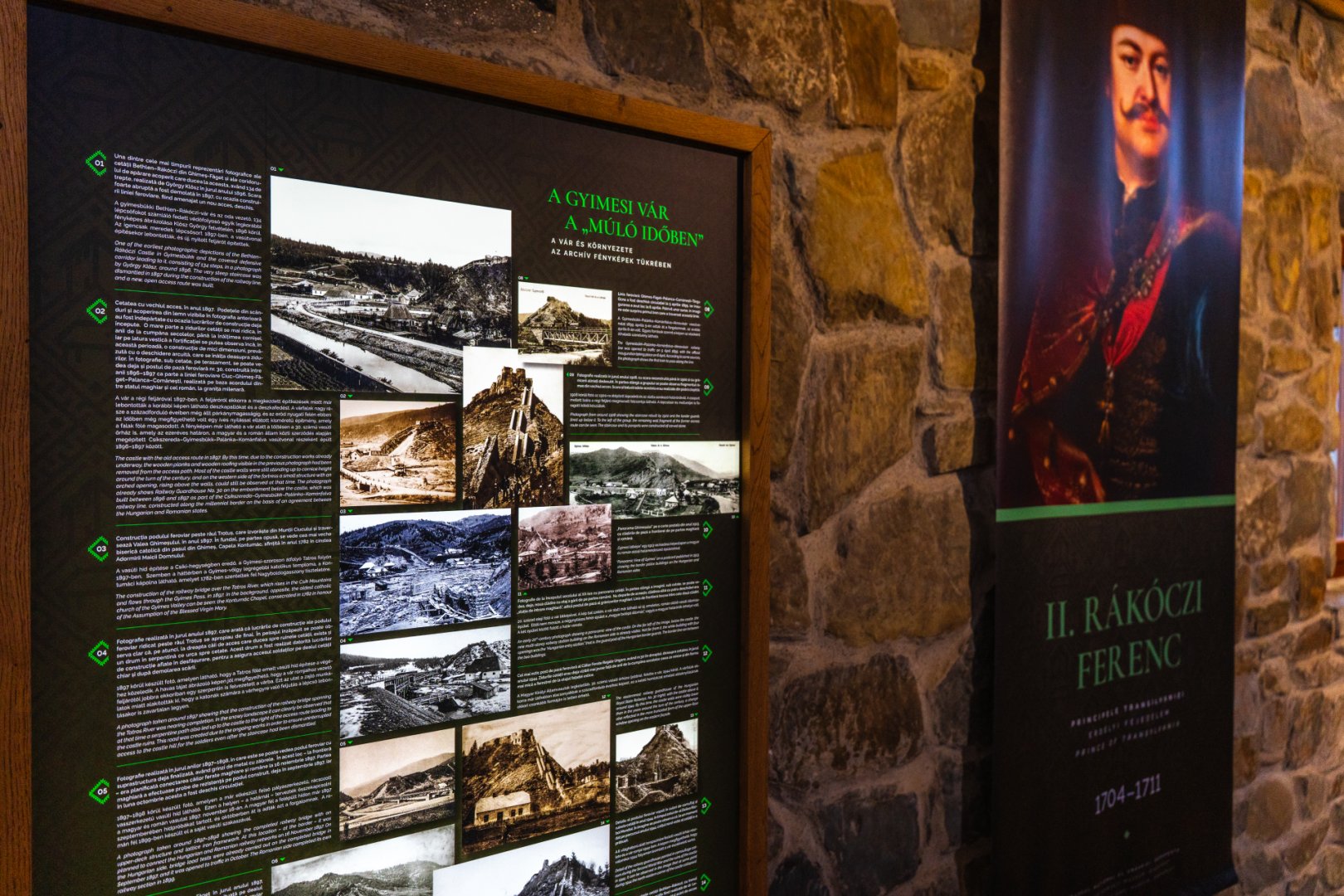
Gyimes Castle in ‘the passing of time’ – The castle and its surroundings as reflected in archive photographs
On the “light box” (backlit panel) located upstairs, visitors can view archive photographs from the late 19th and 20th centuries depicting the Bethlen–Rákóczi Castle in Gyimesbükk and its surroundings. The photographs are accompanied by short explanatory texts that help visitors understand the historical context of the images and illustrate the changes the castle has undergone.
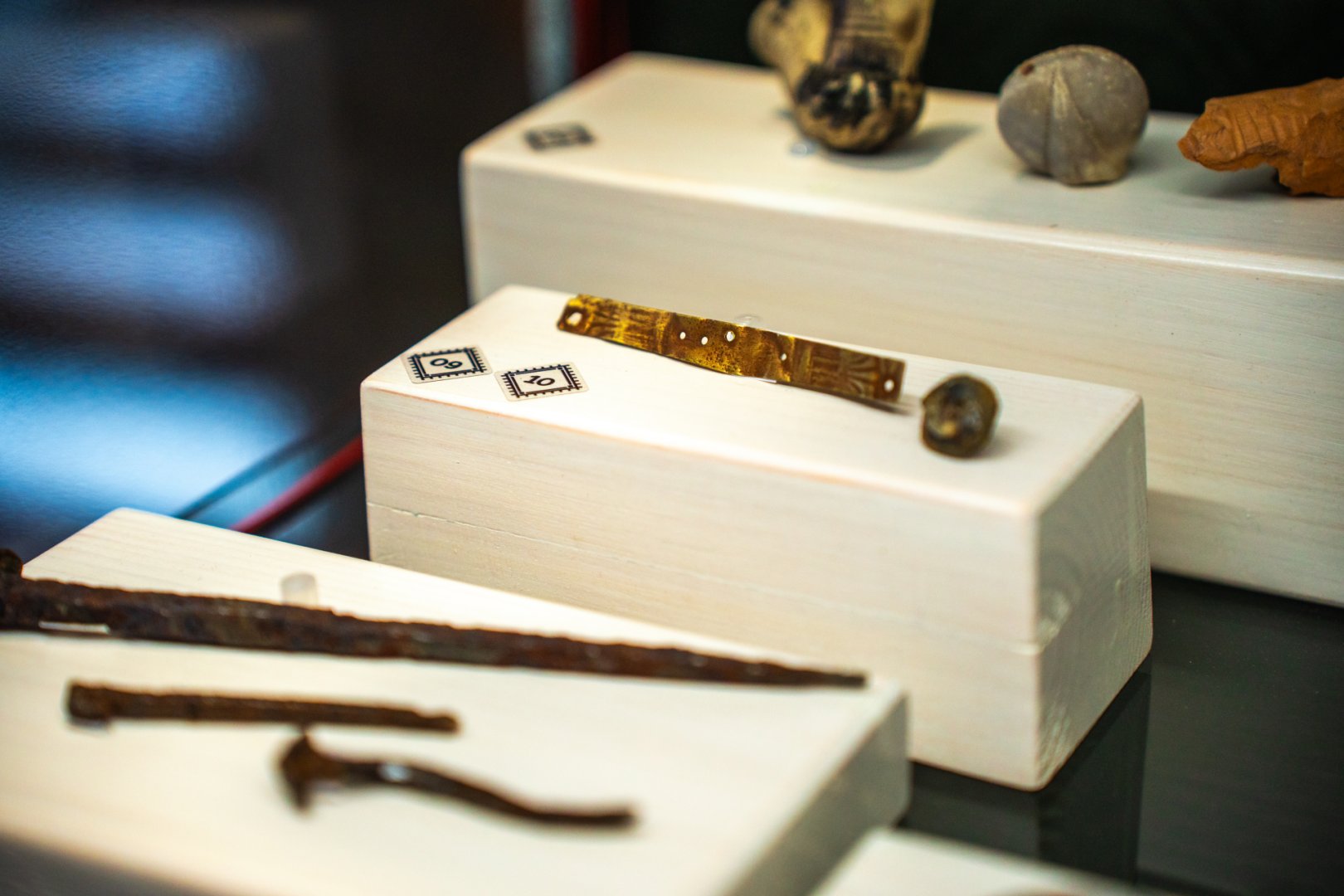
Archaeological finds unearthed on the site of Gyimesbükk Castle
What do the objects unearthed from the ground tell us about the life of a border castle spanning several centuries? The archaeological finds unearthed on the site of the Bethlen–Rákóczi Castle in Gyimesbükk answer this question, whilst offering a unique insight into the castle’s centuries-long history. The exhibited objects – ranging from cannonballs and military canteens to pipe fragments, pottery and everyday utensils – are reminders of the military presence and daily life from the 16th to the 20th centuries. These artefacts are small yet eloquent traces of how soldiers once lived and served within the walls of a frontier fortress.
Legends of the Gyimes Valley
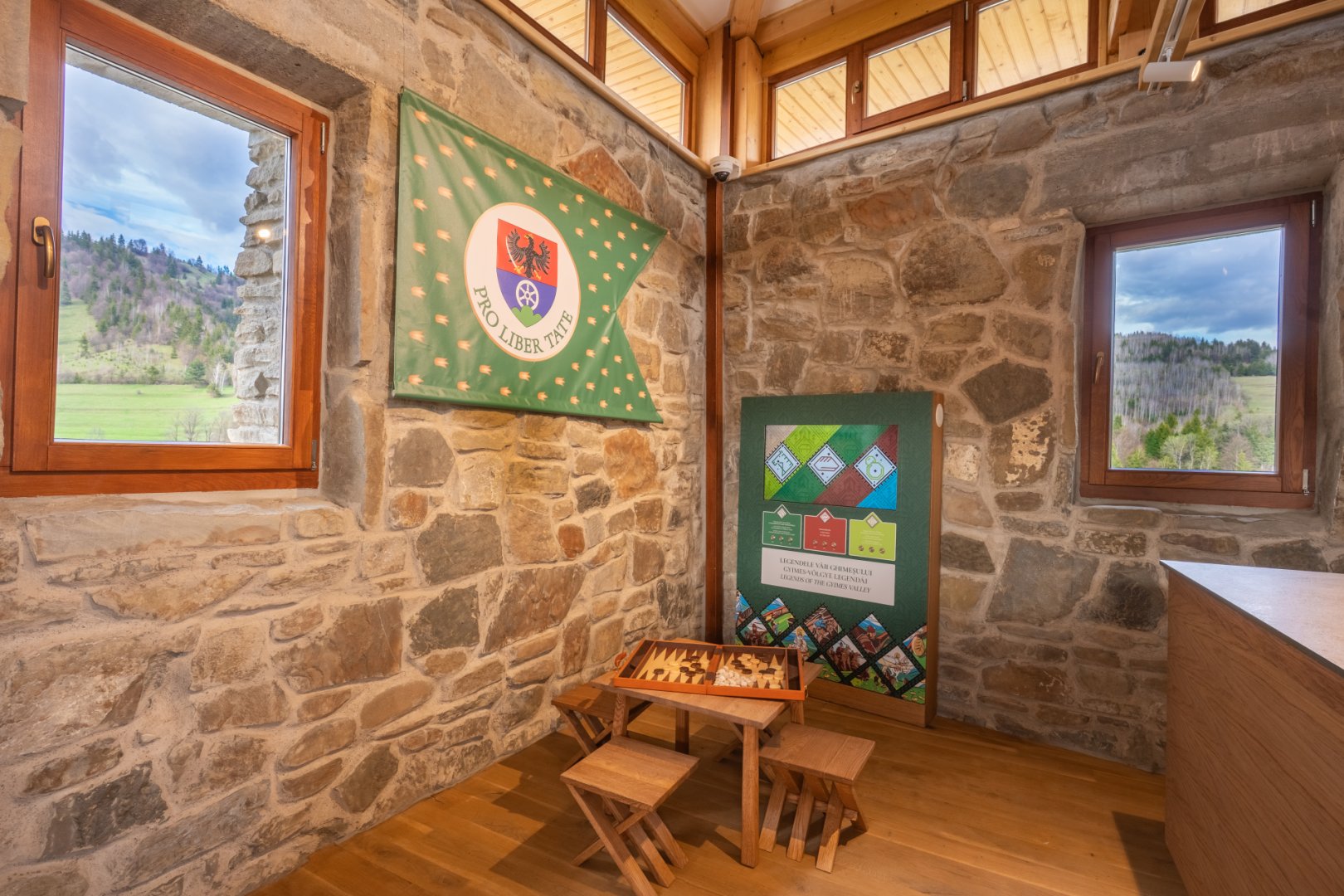
The exhibition’s youngest visitors are welcomed by a corner designed especially for them, furnished with comfortable, scaled-down early modern furniture to suit their size, where they can learn about the region’s past and its tales in a playful way. Three animated short films based on the legends of the Gyimes Valley come to life on the interactive screen. The series of animated films brings to life the story of a dashing Szekler hussar, András Lacz, who in 1789 conquered the sky-scraping cliffs of Rákóczi Castle (Blockhaus) on horseback. Although the covered staircase leading to the fortress, consisting of 134 steps, presented a gruelling challenge even on foot, folk memory has preserved the hussar’s determination, who, knowing no such thing as the impossible, rode his horse up the precipice.
Directly linked to the castle is the only surviving fortress legend in local memory, the story of the Tatar cake, which celebrates the power of ingenuity and community spirit. The castle defenders deceived the besiegers with a huge loaf of bread, leading them to believe that their food supplies were plentiful, thus rendering the starvation siege futile.
The figure of Saint László also evokes the defence of the valley. Among the animations, the story of the king and the golden trap has found its place, guiding us to the boundary between reality and the miraculous. Here, Szög, the legendary steed from the legends, also appears; he could speak to his master and even walk on air. This magical power aided the knight-king amongst the rocky cliffs of the pass, where the gold coins scattered before his pursuers ultimately led to the downfall of the greedy enemy.
Alongside the digital adventures, the nostalgic board game and the classic dice game offer opportunities for playing together, introducing the little ones to the pastimes of days gone by. The visual design of the children’s corner evokes the unique, warp-woven patterns of the Gyimes Valley, allowing even the youngest visitors to connect with the region’s cultural heritage through visual experiences.
Exhibition curators
Anna Füry – Gergely Hohl – Mónika Illy-Frankó – Anna Juhász – Natália Morva-Simon – Adrienn Nagy-Labbancz – Flóra Sasvári – Zsolt Virág
Exhibition design
Magyar Kastélyprogram Nonprofit Kft. – Zsolt Virág